The Top 5 Types of Spirit Spouse Oppression
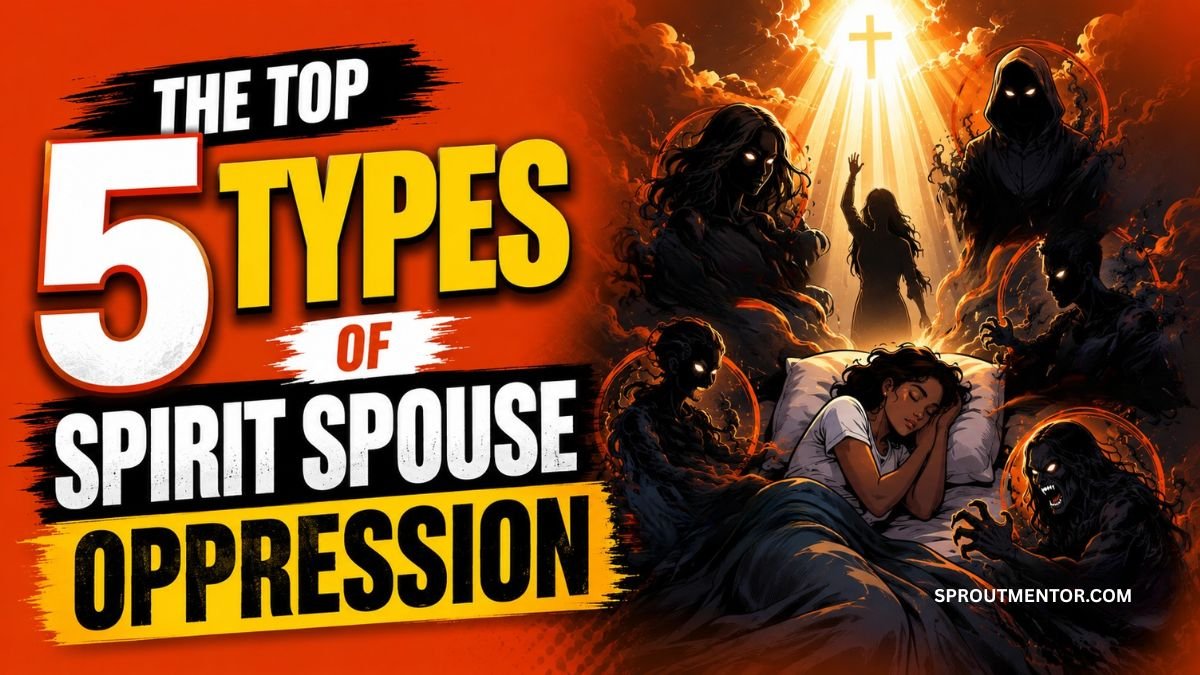
In this part of the series, we look at how spirit spouse oppression often manifests in different patterns.
These are patterns of oppression that show how spiritual influence can vary in expression, but still carry the same goal: to distort intimacy, identity, and spiritual peace.
1. The Covert Type: Hidden Influence Without Visible Form
This is the most subtle form of oppression. It does not always show up in dreams or dramatic experiences. Instead, it is often recognized by its effects rather than its visibility.
A person may wake up feeling:
- emotionally heavy
- spiritually drained
- mentally confused
- or unsettled without explanation
It feels like something happened, even when nothing is remembered.
Jesus hinted at this kind of hidden spiritual activity in Matthew 13:25, where the enemy sowed tares while men slept. This shows that spiritual influence can operate in unseen moments.
In simple terms, this type works like background software running silently, affecting emotions, peace, and clarity without obvious signs.
2. The Camouflage Type: Familiar Faces and Emotional Deception
This type operates through recognition and emotional familiarity. In dreams or impressions, the spiritual influence may appear in the form of known people or emotionally significant figures.
This creates confusion because the mind tries to interpret familiarity as truth.
But Scripture warns us in 2 Corinthians 11:14 that Satan can disguise himself as an angel of light. This means deception often looks familiar, comforting, or even emotionally appealing.
In real life, it is like receiving a message that appears to come from a saved contact—but it is not truly from them. The familiarity makes it easier to trust something that should not be trusted.
This type of oppression works by using emotional recognition to create spiritual confusion.
3. The Serial Partner Type: Cycles of Unstable Attachments
This type is marked by changing patterns of emotional or dream-based attachments. There is no stability, only cycles of shifting experiences.
A person may notice:
- different dream “partners” over time
- emotional highs followed by emptiness
- repeated cycles of desire and disappointment
James 1:14 explains how desire can draw a person away and entangle them, showing how unchecked internal patterns can become cycles.
This type is not about one consistent presence, but about emotional scattering and instability.
It is like constantly switching relationships but never entering true rest or fulfillment. The cycle continues because nothing becomes anchored.
4. The Shape-Shifting Type: Confusion of Identity and Form
This type is characterized by inconsistency in appearance, identity, or experience during spiritual encounters or dreams.
The presence may appear differently at different times, creating confusion, fear, and instability.
This reflects a deeper spiritual principle in 1 Corinthians 14:33, which says that God is not the author of confusion but of peace.
Where confusion increases, discernment becomes weaker.
In practical terms, this can be compared to interacting with someone whose behavior constantly changes—you cannot clearly understand who they are.
This type of oppression produces:
- emotional instability
- fear and uncertainty
- distorted perception
Its main goal is to create confusion where clarity should exist.
5. The Harasser Type: Aggressive and Violent Intrusion
This is one of the more intense forms of oppression. It is marked by forceful and disturbing experiences, often during sleep.
It may include:
- fear-filled dreams
- sleep paralysis sensations
- feelings of pressure or restriction
- lingering fear upon waking
In Mark 9, we see a violent demonic manifestation in the boy who was thrown into fire and water. This shows that some spiritual oppression can be aggressive and forceful.
This type is less about subtle influence and more about violation of peace and rest.
It is like an intrusion that disrupts sleep, peace, and emotional stability.
Conclusion
These five types show that spirit spouse oppression does not always appear in one form. It can be:
- subtle (Covert)
- familiar (Camouflage)
- repetitive (Serial Partner)
- confusing (Shape-Shifting)
- or aggressive (Harasser)
But in every case, the truth remains the same:
Jesus Christ has authority over every form of oppression.
As Colossians 2:15 declares, He disarmed principalities and made a public spectacle of them.
So the goal of understanding these patterns is not fear—but discernment, freedom, and restoration in Christ.

Continue Reading More On Spiritual Warfare In The Guides Below:
|