Which Type of Curse Are You Dealing With? 5 Main Types Explained
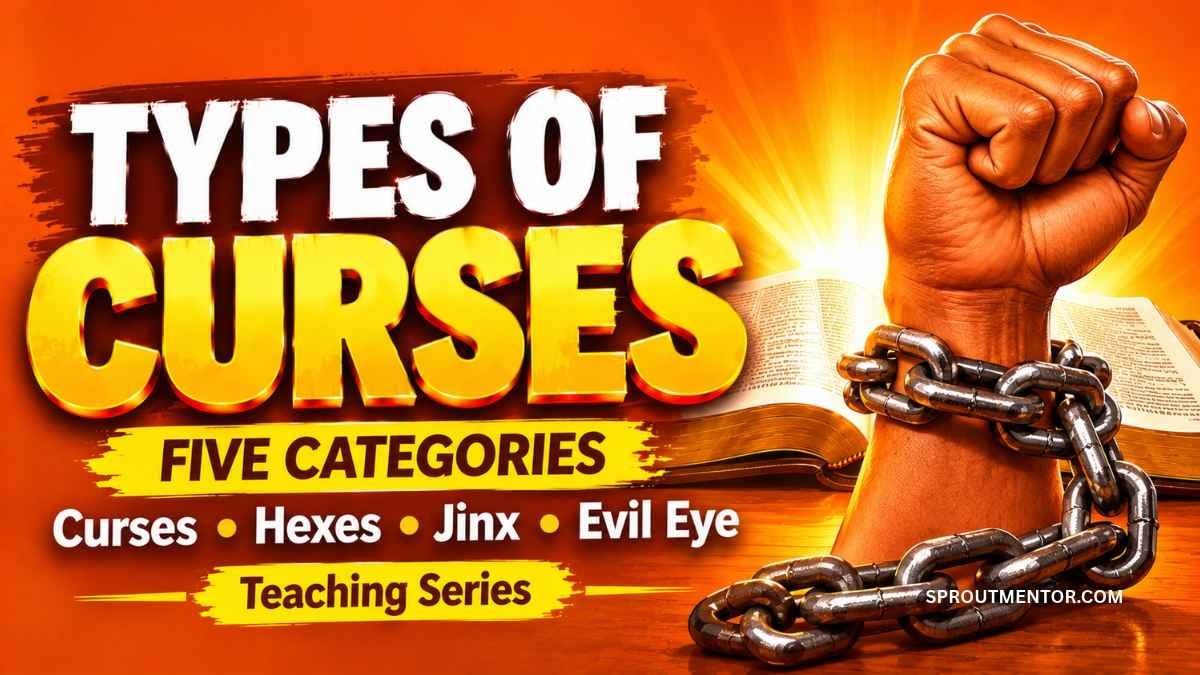
Do you suspect something keeps resisting your prayers, your effort, or your best decisions? If you do, the first question to ask is not whether a curse exists, but which of the main types of curses in the Bible you might actually be facing. Scripture groups curses into several recognizable categories, each with a different cause and a different path to freedom.
Generational Curses
A generational curse is passed down through a family bloodline, often traced back to ancestral disobedience, idolatry, or an unresolved covenant violation. These tend to repeat as recognizable patterns across family lines, addiction that resurfaces in every generation, chronic poverty despite effort, broken marriages that follow the exact same shape. Exodus 20:5 names this principle directly, describing iniquity visited upon children “unto the third and fourth generation.” Importantly, this is never about inherited guilt. Ezekiel 18:20 is explicit that a son does not bear a father’s iniquity. What travels is influence and open ground, not personal blame, and what you do with that open ground is entirely your own choice.
Cast or Spoken Curses
This type is pronounced verbally by another person, whether an authority figure, a family member, or someone practicing witchcraft or occult arts. Numbers 22 to 24 gives us Scripture’s clearest case study, where Balak hired Balaam specifically to pronounce a spoken curse over Israel. What matters here is that a cast curse requires legal ground to land at all. Proverbs 26:2 states this plainly, that a curse without cause finds nowhere to settle. A word spoken against someone standing in right covenant relationship with God, as Israel was, simply has nothing to attach itself to.
Earned or Law-Based Curses
This category results directly from personal action, sin, or disobedience to divine law. Deuteronomy 28 lays out this pattern in full, obedience produces blessing, and disobedience produces its own built-in consequence, with no outside party involved at all. This is the most straightforward type to identify, because it traces back to your own choices rather than someone else’s words or a family pattern, and it is also the type Scripture calls believers to examine first, before assuming the problem lies anywhere else.
Self-Imposed Curses
Here, a person brings consequence on themselves not through sinful action, but through destructive self-talk, ungodly vows, or careless declarations. Jephthah’s rash vow cost him his own daughter (Judges 11:30 to 31), and Saul’s hasty oath nearly cost his son’s life (1 Samuel 14:24). This type also includes quieter, unspoken inner vows, beliefs like “I will never succeed” or “I’m just like my father,” repeated internally until they harden into settled identity.
Divine or Biblical Curses
The final type is pronounced directly by God Himself, as judgment for major covenant transgression. The historic curses in Deuteronomy 27 and 28, announced publicly from Mount Ebal, stand as Scripture’s clearest example, judicial consequence flowing directly from the Judge of all the earth rather than through any human or demonic agent.
Conclusion
Identifying which of these main types of curses in the Bible applies to your situation is not about becoming consumed with diagnosis. It is about bringing clarity to confusion, so the right response, repentance, renunciation, or simply standing on what Christ has already secured, can actually be applied. And whichever type you find yourself facing, Galatians 3:13 remains the governing answer over every single one: “Christ hath redeemed us from the curse of the law, being made a curse for us.”
Continue Reading More On Spiritual Warfare In The Guides Below:
|